Abstract
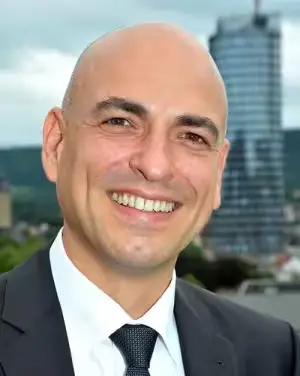
4 min readIn 1920, a publication by an organic chemist reached the scientific community. Hermann Staudinger published an article titled “Über Polymerisationen” (“On Polymerizations”),1 describing for the first time the concept of macromolecules consisting of a large number of repeating units. This revolutionary publication will celebrate its 100th anniversary in 2020. Since 1920, much has happened and polymer chemistry and physics has evolved into an important research field. Furthermore, polymers have also made triumphant progress economically and have become indispensable in many areas of our daily lives. Nevertheless, macromolecular chemistry faces great challenges just like today's society itself. The energy transition and sustainability are becoming increasingly important, and polymers can make a significant contribution here. But also, polymer-specific tasks and problems, such as micro-plastics and polymer-based waste in general, will be a challenge in the second century of macromolecular science. The anniversary of 100 years of polymer chemistry offers the opportunity to look back to the past, to view the present, and to look ahead to the future. Various events will therefore be dedicated to the field of polymer chemistry 100 years after the first description: in particular, the ACS National Meetings or the Conference of the Society of Polymer Science, Japan. A special highlight will be the celebration of 100 years of polymer chemistry of the macromolecular chemistry division of the GDCh, which brings together leading scientists and industry in September 2020. The current special issue in Macromolecular Rapid Communications and the parallel special issue in Macromolecular Chemistry and Physics marks the beginning of the celebrations regarding 100 years of polymer science. It is a great honor for us to publish this double special issue in the journals founded by Hermann Staudinger. Both journals have been associated with polymer chemistry and physics from the start, and both issues will be freely available for the entire year, effectively demonstrating the field of macromolecular science to the community and the public. Both issues feature outstanding articles by the world's leading scientists in polymer science. Also, various aspects of modern macromolecular chemistry are addressed—from synthesis to characterization and application in many possible scenarios. A special highlight of the issue in Macromolecular Rapid Communications, for example, is the article by the group of Barner-Kowollik.2 The authors present a system with two photoswitchable motifs that can be utilized to achieve a wavelength-selective folding of the polymer chains. Using the [2 + 2] and the [4 + 4] cycloaddition reaction, both units can be excited one after the other (dual photoresponsive material). Furthermore, Schlaad and co-workers have shown that the polymerization of phenolic-acid-based 2-oxazoline monomers is possible in a fast and efficient manner.3 The polymerization could be carried out cationically by means of methyl tosylate as an initiator. Extensive analytics revealed that well-defined polymers could be obtained. Finally, post-polymerization functionalization was also possible, whereby poly(2-oxazolines) with catechol groups could be obtained. Buchmeiser et al. utilized a cationic molybdenum complex for the cyclopolyermization of diynes in a regio- and stereospecificity manner.4 The Biginelli reaction is increasingly important in modern polymer chemistry. This is a multi-component reaction for functionalization of polymers. Esen and Meier have now shown that starch can be functionalized in this manner.5 The successful side-chain functionalization could be proven by SEC and NMR. Metal-organic frameworks (MOFs) in combination with polymers also play an increasingly important role, since both property profiles can be usefully combined. In his review article, Schmidt presents the various possibilities and thereby highlights the enormous potential of this combination of materials.6 In addition to these selected contributions, the special issue contains another 29 exciting articles in various fields of macromolecular science, and the special issue in Macromolecular Chemistry and Physics also contains a number of articles that demonstrate the broadness of polymer science. This special issue will be a great start for the anniversary year 2020 and is hopefully a stimulus to the scientific community for future developments in this area. Thus, we are looking forward to the second century of polymer science and hope that you enjoy the special issue. Ulrich S. Schubert, Guest Editor Stefan Zechel Ulrich S. Schubert was born in Tübingen (Germany) in 1969. He studied chemistry in Frankfurt and Bayreuth and at Virginia Commonwealth University, Richmond (USA). His Ph.D. studies were performed at the universities of Bayreuth and South Florida. After post-doctoral training with J.-M. Lehn at the University of Strasbourg (France), he moved to the Technical University Munich (Germany) and obtained his Habilitation in 1999. From 1999–2000 he was a professor at the University of Munich and from 2000–2007 a full professor at the TU Eindhoven (the Netherlands). Since 2007, he has been a full professor at Friedrich Schiller University Jena, Germany. Prof. Schubert is founder and director of the Jena Center for Soft Matter (JCSM) and the Center for Energy and Environmental Chemistry Jena (CEEC Jena). Prof. Schubert is an elected member of the German National Academy of Science and Engineering (Acatech) and external scientific member of the Max-Planck-Gesellschaft (MPI for Colloid & Interfaces, Golm). Stefan Zechel was born in Blankenburg (Germany) in 1988. He studied chemistry in Jena and performed his Ph.D. under the supervision of Prof. U. S. Schubert. He obtained a stipend from the Verband der Chemischen Industrie (VCI). After completing his Ph.D., he started his postdoc in the group of Prof. Schubert. From 2017 on, he has been funded by the Carl-Zeiss Foundation.

Discussion(0)
No comments yet. Be the first to comment.