Abstract
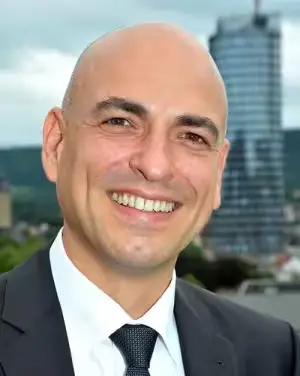
5 min readOne-hundred years have passed since the first publication in the field of macromolecular chemistry. In 1920, Hermann Staudinger published an article entitled “Über Polymerisationen” (“On Polymerizations”).1 He described the concept of macromolecules consisting of a large number of repeating units. Since the first description, polymer chemistry, physics and engineering has become a highly important field of research, and in industry today polymers represent an important field. In a large range of products, polymers occur and uncountable applications would not be possible without them. The ever-evolving field always opens up new possibilities, but struggles with various challenges. In modern medicine, polymers should help to cure diseases and to deliver effectively antibiotics; in the energy sector they should enable the storage of electricity, they should be sustainable and reusable. In addition, the discussion about plastic waste and micro-plastics, a general human challenge in the field of polymers, hovers over everything. On the one hand, the anniversary of 100 years of polymer chemistry offers the opportunity to look back at the past, to view the present and to look ahead to the future. Various events will therefore be dedicated to the field of polymer chemistry 100 years after the first description, in particular the ACS National Meetings or the Conference of the Society of Polymer Science, Japan. A special highlight will be the celebration of 100 years of polymer chemistry of the GDCh Macromolecular Chemistry Division, which brings together leading scientists and industry in September 2020. The current special issue in Macromolecular Chemistry and Physics and the parallel special issue in Macromolecular Rapid Communications marks the beginning of the celebrations of 100 years of polymer science. It is a special honor for us to publish this double special issue in Macromolecular Chemistry and Physics, founded by Hermann Staudinger himself, and in its first spin-off journal launched more than 40 years ago. Both journals have been associated with polymer chemistry and physics from the start. Both issues will be open access in 2020 effectively demonstrating the field of macromolecular chemistry to the complete community. Both issues feature outstanding articles by the world's leading scientists in polymer chemistry. Also, various aspects of modern macromolecular chemistry are addressed, from synthesis to characterization and application in a wide range of areas. The understanding of polymerization processes has always been an essential part of macromolecular chemistry. For this reason, studies such as those by Philipp Vana and his group are so essential for the development of polymer science.2 The authors studied the polymerization of n-pentyl methacrylate in detail and analyzed the kinetics using pulsed laser polymerization technqiues. The change in energy production to renewable sources also requires urgently effective and environmentally friendly ways to store electrical energy. New battery materials are the key for this purpose. The recent Nobel Prize also highlights the importance of exploring such systems. An excellent trend article by Krzysztof Matyjaszewski deals with lithium metal anode-based rechargeable batteries and the use of polymers to improve their performance and stability.3 Another article in the field of energy storage polymers by Jean-François Gohy and co-workers focuses on the production of nano-objects using a polymerization-induced self-assembly process.4 A copolymer based on poly(2,2,6,6-tetramethylpiperidinyloxy-4-yl-methacrylate) (PTMA) was prepared by the PISA process to obtain tailor-made nano-objects. These could be visualized by TEM and revealed electrochemical redox activity. Due to the low viscosities of the solutions, these polymers could be of interest for redox-flow batteries. Hermann Staudinger has performed a variety of studies regarding natural polymers such as cellulose. Therefore, we are pleased to also have a contribution on polysaccharide chemistry as part of the Macromolecular Chemistry and Physics issue. The Heinze group investigated the bonding situation in xylan sulfates using NMR spectroscopy to differentiate the different variants in the presence of pyridine.5 Finally, another contribution is devoted to the study of one of today's most important polymers; poly(ethylene glycol). The Saalwächter group examined the intracrystalline dynamics thereby elucidated that dilution with oligomers leads to faster intracrystalline motions.6 In addition to the above-mentioned contributions, this special issue contains many more exciting articles in various fields of macromolecular science. In addition, a wide range of articles can be found in the other part of the double special in Macromolecular Rapid Communications. This special issue presents a great start for the anniversary year 2020 and is hopefully a stimulus to the scientific community for future developments in this area. Thus, we are looking forward to the second century of polymer science and hope that you enjoy this special issue. Ulrich S. Schubert, Guest Editor Stefan Zechel Ulrich S. Schubert was born in Tübingen (Germany) in 1969. He studied chemistry in Frankfurt and Bayreuth and at Virginia Commonwealth University, Richmond (USA). His Ph.D. studies were performed at the universities of Bayreuth and South Florida. After post-doctoral training with J.-M. Lehn at the University of Strasbourg (France), he moved to the Technical University Munich (Germany) and obtained his Habilitation in 1999. During 1999–2000 he was professor at the University of Munich and from 2000–2007 a full professor at TU Eindhoven (the Netherlands). Since 2007, he has been a full professor at Friedrich Schiller University Jena, Germany. Prof. Schubert is founder and director of the Jena Center for Soft Matter (JCSM) and the Center for Energy and Environmental Chemistry Jena (CEEC Jena). Prof. Schubert is elected member of the German National Academy of Science and Engineering (acatech) and an external scientific member of the Max-Planck-Gesellschaft (MPI for Colloid & Interfaces, Golm). Stefan Zechel was born in Blankenburg (Germany) in 1988. He studied chemistry in Jena and performed his Ph.D. under the supervision of Prof. Dr. U. S. Schubert. He obtained a stipend from the Verband der Chemischen Industrie (VCI). After completing his Ph.D., he started his postdoc in the group of Prof. Schubert. From 2017 on, he has been funded by the Carl-Zeiss Foundation.

Discussion(0)
No comments yet. Be the first to comment.