Abstract
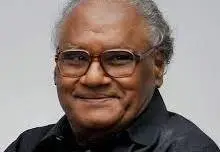
3 min readIt is with great pleasure that I write this editorial for the special issue of Chemistry–An Asian Journal, in honour of the 60th birthday of Prof. Chunli Bai. Prof. Bai’s 60th birthday is truly a great occasion, for he is a leader of science in an important country with great heritage.1 Picture of C.N.R. Rao Prof. Chunli Bai received both his Master’s and PhD degrees from the Institute of Chemistry of the Chinese Academy of Sciences in Beijing. He carried out post-doctoral work in the area of Physical Chemistry in the United States. Ever since his return to China, he has been associated with the Institute of Chemistry, Chinese Academy of Sciences. He has been a professor at this Institute for many years and has contributed to the growth of the Institute in many ways by leading research in molecular and materials chemistry. Professor Bai’s major scientific achievements include the development of new techniques and methodologies for use in molecular and materials sciences. He is one of the pioneers in the area of scanning probe microscopy and nanoscience. His leadership has enabled the Institute of Chemistry to become well-known in nanoscience and related areas. He has published outstanding research papers, reviews, and books. His research publications cover a wide range of topics in molecular and materials chemistry and have characteristically been of high quality. The books he has written cover a number of topics including frontiers of molecular science, scanning tunneling microscopy, molecular wires and switches, nanoscience and technology, and so on. These important contributions have established Prof. Bai as a leading figure in the global chemistry community. He has been a speaker at many international conferences and is highly respected. To say that his leadership has made Chinese chemistry and nanoscience prominent in the world is not an exaggeration. In the last few years, he was head of the Graduate University of the Chinese Academy of Sciences, which is contributing significantly to the growth of science in China. Besides being the Director of the National Centre for Science and Technology, he became Vice-President of the Chinese Academy of Sciences some years ago, and then became its President in 2011. He is a member of a number of foreign academies including the US National Academy of Sciences, the Russian Academy of Sciences, the Danish Academy of Sciences, the German National Science Academy, and the Indian Academy of Sciences. He is also an Honorary Fellow of the Royal Society of Chemistry. He has received honorary doctorates from a number of universities from all over the world. In recent years, he has been closely associated with the work of Academy of Sciences for the Developing World (TWAS), which is now called the World Academy of Sciences. He was Vice-President of this Academy for some time, and became President earlier this year. He will certainly continue to make valuable contributions to the development of science in the third world. Prof. Chunli Bai has received a number of awards, prizes, and recognitions from China and elsewhere for his contributions to chemical research and science as a whole. He is a board member or editor of many important professional journals. As an ambassador of Chinese science, he now leads the Chinese Academy to take China to greater heights in science. In this process, he has also emerged as an important figure in determining the future growth of science in the world at large. It has been a great pleasure to write this guest editorial dedicated to celebrate Prof. Chunli Bai’s 60th birthday. C.N.R. Rao1

Discussion(0)
No comments yet. Be the first to comment.