Abstract
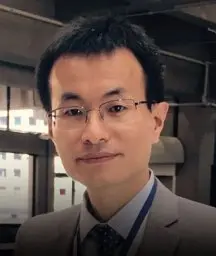
5 min read2016 marks the 10th anniversary of the Suzhou Institute of Nano-Tech and Nano-Bionics of the Chinese Academy of Sciences (SINANO). Located in Suzhou, one of the most flourishing economic areas in China, SINANO is dedicated to the development of advanced nanoscience and technology, aims to bridge the gap between academic research and the industry of nanoscience and technology, and promotes the commercialization and utilization of intelligent properties. The research at SINANO covers a broad range of fundamental and applied research in chemistry, physics, materials science, and semiconductor devices, pursuing the development of key innovations with the aim of furthering urgent national needs and important strategic targets. Within the last decade, SINANO has grown into one of China's leading research institutions in nanoscience and technology, with a great international reputation. If we consider that the work done by the entire research enterprise is a process from zero to 100, it can be divided into three important segments. The first one, from zero to one, is the most important one. It typically includes the most original, fundamental part of research and represents the ultimate process of knowledge generation. It generates the very important fundamental intellectual properties that could have significant impact on society in the next several decades. This is also being called by many Chinese scientists as the “first mile” of the research. The 2nd segment, from 1 to 99, is a process to continue to improve and optimize the existing concept, material, and technology. In this process, scientists will need to be aware of where the weakest links are in their materials, devices, and systems, and come up with many different strategies to optimize the properties and performance of a particular material and device. This process of optimization, which sometimes seems to be incremental, is another critical step in developing a useful and commercially viable technology. The 3rd segment, from 99 to 100, represents the final step in turning a particular science breakthrough into a useful technology and product, i.e. technology transfer and commercialization. This is also a process that the general public can experience the real impact in their daily life, because of a particular scientific advancement. It is also called by many Chinese scientists the “final mile” of the research. This final step in many cases is very challenging, as not every scientific breakthrough can readily turn into a useful product. It will require close interactions between many parties: researchers, governments, and entrepreneurs. SINANO, as an institute with unique missions from the very beginning, has been carrying out research that can be categorized into all these three segments. One will see many of these good examples in this special issue of Small. From its birth in 2006, SINANO has experienced rapid development over the past 10 years. Currently, there are more than 500 formal employees plus 500 graduate students and postdocs working at SINANO. Our researchers have continued to perform innovative research at the forefront of semiconductor materials and devices, energy materials, enviromental materials, biological technologies, etc, including III-V semiconductor lasers, high-performance carbon nanofibers, high-performance polymer membranes, printable electronics, energy storage and conversion materials, nuclear acid and protein nanochips for high-sensitive disease detection, near-infrared fluorescence imaging-guided drug delivery and therapeutics, etc. The most prominent feature of the research at SINANO is that we execute the fundamental research from the view of its practical applications by taking advantage of the novel properties of materials on the nanoscale. We know that our understanding at the fundamental level, including discovery of materials with new functions, deep understanding of the structure–function relationships of materials, and the design of materials with better performances, will definitely help their industrial conversion and utilization. This special issue includes 2 reviews and 19 research articles. The topics cover nanomaterials, nanodevices, nanobiomedicine, etc. We hope that this special issue not only introduces recent research at SINANO to the scientific community, but also provides an incentive for further multi-disciplinary collaboration with other researchers from all over the world. Last but not least, we would like to express our sincere appreciation to Dr. José Oliveira and Dr. Xin Su and the Small editorial team for their efforts to publish this special issue. Peidong Yang is a Chemistry professor, and S. K. and Angela Chan Distinguished Chair Professor in Energy at the University of California, Berkeley. He is known particularly for his work on semiconductor nanowires and their photonic and energy applications. He is the director for California Research Alliance by BASF, and co-director for the Kavli Energy Nanoscience Institute. Dr. Yang received his B.A. in Chemistry from the University of Science and Technology in China in 1993 and his Ph.D. in Chemistry from Harvard University in 1997, and did his postdoctoral fellowship at the University of California, Santa Barbara in 1999. Now, he is a member of both the National Academy of Sciences and the American Academy of Arts and Sciences. Hui Yang has been the founding director of the Suzhou Institute of Nano-Tech and Nano-Bionics, Chinese Academy of Sciences. He received his B.S. and Ph.D. degree from Peking University and Institute of Semiconductors, Chinese Academy of Sciences in 1982 and 1990, respectively. His main research interests include the growth of group III-V compound semiconductor materials and their low dimensional structures, as well as opto-electronics devices, by means of molecular beam epitaxy and metal-organic chemical vapor deposition methods. In recent, his research particularly focuses on the Gallium Nitride blue and green lasers and III-V semiconductor four-junction tandem solar cells.

Discussion(0)
No comments yet. Be the first to comment.